
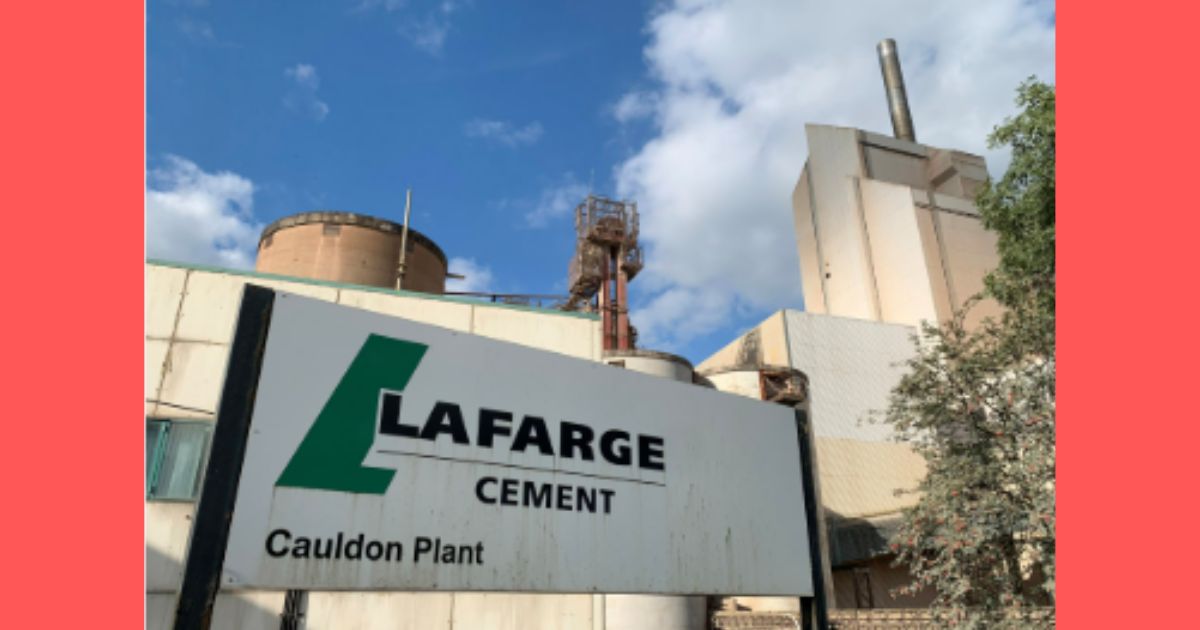
Lafarge Convicted of Funding ISIS in Syria War Case
A French court has found cement manufacturer Lafarge guilty of financing extremist groups, including the so-called Islamic State, during Syria’s brutal civil war. The ruling marks a historic moment in European corporate law, as it is the first time a company in France has been convicted for funding terrorism.
The verdict comes after years of investigations into how the company continued operating a cement factory in northern Syria even as armed groups seized control of the region.
1. What Happened
A criminal court in Paris ruled that Lafarge transferred millions of dollars to militant organizations between 2013 and 2014 to keep its cement plant running in the town of Jalabiya, near the Turkish border.
According to prosecutors, the company paid approximately $6.5 million to various armed factions. This included payments to ISIS—formally known as the Islamic State—as well as to the Nusra Front, an extremist group linked to al-Qaeda.
Judges determined that the payments were not accidental or indirect. Instead, they described them as part of an arrangement designed to allow Lafarge to continue producing cement while militants controlled the surrounding territory.
Former CEO Bruno Lafont was sentenced to six years in prison. Former deputy managing director Christian Herrault received a five-year sentence. Another former executive, Firas Tlass, was sentenced in absentia to seven years.
The company itself was fined more than €1 million. Lafarge is now part of the Swiss-based building materials group Holcim.
The court said the payments enabled extremist groups to gain economic resources and helped strengthen their control in Syria during one of the most violent periods of the war.
This French case follows a 2022 resolution in the United States, where Lafarge admitted to supporting terrorist organizations and agreed to pay nearly $778 million in penalties to U.S. authorities.
2. Why It Matters
This case is significant for several reasons, especially for Western audiences in the United States, the United Kingdom, and Canada.
First, it sets a legal precedent. For the first time in France, a corporation has been criminally convicted of financing terrorism. This sends a clear message that multinational companies cannot ignore international sanctions or anti-terror laws when operating in high-risk regions.
Second, it highlights the legal risks companies face when doing business in conflict zones. During the Syrian civil war, which began in 2011, ISIS captured large areas of Syria and Iraq, declaring a so-called “caliphate” in 2014. The group financed itself through oil sales, taxes, looting, and control of natural resources—including industrial sites.
For American and British policymakers, this case reinforces the importance of strict compliance with anti-terror financing regulations. Both the U.S. Treasury Department and the UK’s Office of Financial Sanctions Implementation closely monitor corporate dealings in sanctioned territories.
Third, the case raises ethical questions about corporate responsibility. Courts concluded that Lafarge’s primary goal was economic—keeping a profitable factory running—even as extremist groups committed documented atrocities in the region.
3. Who Is Affected
Local Syrian Workers
One defense argument was that keeping the plant open protected Syrian employees who relied on their wages. However, the court determined that economic considerations outweighed safety concerns.
The Syrian civil war has displaced millions and devastated infrastructure. Workers in conflict zones often face impossible choices—stay employed in dangerous conditions or lose their livelihoods entirely.
Shareholders and Investors
Global investors are also impacted. After the U.S. case in 2022, Lafarge’s reputation suffered significant damage. Institutional investors in Europe and North America have increased scrutiny of Environmental, Social, and Governance (ESG) standards.
Cases like this can affect stock prices, corporate mergers, and investor trust.
Corporate Leaders Worldwide
Executives across industries are watching closely. Multinational firms operating in unstable regions—whether in the Middle East, Africa, or parts of Asia—must assess risks carefully.
Failure to comply with anti-terror financing laws can lead to criminal charges, heavy fines, and prison sentences.
Western Governments
Governments in the U.S., UK, and Canada have tightened sanctions regimes in recent years. The Lafarge case demonstrates that prosecutors are willing to pursue companies that violate these rules—even years after the fact.
4. What Happens Next
The company has not publicly commented in detail on the French verdict, and appeals are possible.
Meanwhile, a separate investigation in France is ongoing regarding potential complicity in crimes against humanity. That inquiry examines whether corporate actions indirectly supported abuses committed by extremist groups.
In the United States, the 2022 plea agreement closed criminal proceedings there, but American authorities continue to monitor international business practices in sanctioned regions.
For Holcim, which merged with Lafarge in 2015, the focus is now on rebuilding corporate credibility and strengthening compliance systems.
Experts say the case may encourage European lawmakers to clarify corporate accountability standards in conflict zones. It could also inspire similar prosecutions in other countries.
5. Expert and Policy Insight
Legal analysts describe the ruling as part of a broader global trend toward corporate accountability.
Over the past decade, U.S. and European regulators have increasingly pursued companies for violating sanctions, anti-money laundering laws, and counter-terrorism financing statutes.
In Washington, the Department of Justice has emphasized that corporations cannot treat penalties as simply “the cost of doing business.” Executives may face personal criminal liability.
Policy experts argue that this case underscores three key lessons:
Compliance must be proactive. Companies operating in unstable regions must continuously monitor political developments.
Ethics and profits cannot be separated. Business decisions in war zones carry legal and moral consequences.
Leadership accountability matters. Courts are increasingly willing to hold individual executives responsible.
For North American companies, especially those with global supply chains, this case serves as a cautionary tale.
6. FAQ
1. What was Lafarge convicted of?
The company was found guilty of financing terrorist organizations, including ISIS, by paying money to keep its Syrian cement factory operating during the civil war.
2. How much money was involved?
French prosecutors said around $6.5 million was paid to various armed groups between 2013 and 2014.
3. Were executives held responsible?
Yes. Former CEO Bruno Lafont received a six-year prison sentence, and other executives were also sentenced.
4. What happened in the United States?
In 2022, Lafarge admitted wrongdoing in a U.S. case and agreed to pay nearly $778 million in penalties.
5. Could other companies face similar charges?
Yes. Authorities in Western countries have shown they are willing to prosecute corporations that violate anti-terror financing laws.
Conclusion
The Syrian conflict began in 2011 after protests against President Bashar al-Assad’s government. Over time, multiple armed groups became involved, including ISIS, which controlled large areas by 2014 before being pushed back by international coalitions.
Businesses operating in the region faced severe instability. However, courts in both France and the United States have now made clear that commercial pressure does not justify funding sanctioned organizations.
The Lafarge case will likely be studied in law schools and corporate boardrooms for years to come. It stands as a warning that in the modern global economy, companies are expected to uphold legal and ethical standards—even in the most difficult environments.
As Western governments continue strengthening anti-terror financing rules, multinational corporations face a clear choice: withdraw from high-risk areas or ensure full compliance. The consequences of failing to do so are now unmistakable.

- AP Inter Results 2026 Released – Check & Download Marks Online - April 15, 2026
- IPL 2026 SRH vs RR: Hyderabad’s Stunning 57-Run Comeback - April 14, 2026
- Trump Iran Crisis: A Test of Power in a Changing World - April 14, 2026


