
How Credit Cards Work: The Hidden Process You Must Know
In today’s digital world, credit cards have become a common part of daily life. From shopping malls to online food orders, payments are completed in seconds. But have you ever wondered what actually happens behind that simple swipe?
Understanding how credit cards work can help you avoid unnecessary interest, stay debt-free, and improve your financial future.
Let’s break it down in simple terms.
What Information Is Stored on a Credit Card?
Every credit card contains important details:
- Card Number (16 digits): Unique number linked to your account.
- Cardholder Name: Person authorized to use the card.
- Expiry Date: Validity of the card.
- CVV (Security Code): 3 or 4-digit number for online transactions.
- EMV Chip & Magnetic Stripe: Protects transaction data and prevents fraud.
These elements ensure secure and fast payments.
What Happens When You Swipe a Credit Card?
Whenever you make a purchase, this process takes place:
Authorization
The merchant sends a payment request to your bank. The bank checks your available credit limit and verifies the transaction.
Approval
If everything is valid, the transaction is approved within seconds.
Posting
The spent amount is added to your credit card balance.
Billing Cycle
A billing cycle usually lasts 30 days. At the end, you receive a statement showing:
- Total amount spent
- Minimum amount due
- Due date
Credit Card Interest: The Real Trap Explained
The most important term to understand is APR (Annual Percentage Rate).
If you:
- Pay the full amount before the due date → No interest charged
- Pay only the minimum due → Interest is charged on the remaining balance
Interest can range from 30%–45% annually in many cases. This is how people fall into debt traps.
Additional charges may include:
- Late payment fee
- Over-limit fee
- Cash withdrawal fee
That’s why paying the full bill on time is crucial.
Credit Limit: How Much Can You Spend?
Your bank assigns a credit limit based on:
- Income
- Past repayment history
- Credit score
You cannot spend beyond this limit without penalties.
Smart Tip: Try to use only 30% of your total credit limit. This improves your credit score.
How Credit Cards Help Improve Credit Score
One of the biggest advantages of responsible credit card usage is building a strong credit profile.
Paying on time helps:
- Increase your credit score
- Improve your loan eligibility
- Get lower interest rates on home/car loans
- Improve approval chances for future credit cards
Your credit card is not just for spending — it is a tool for financial growth.
How to Avoid the Burden of Credit Card Interest
Here are practical strategies:
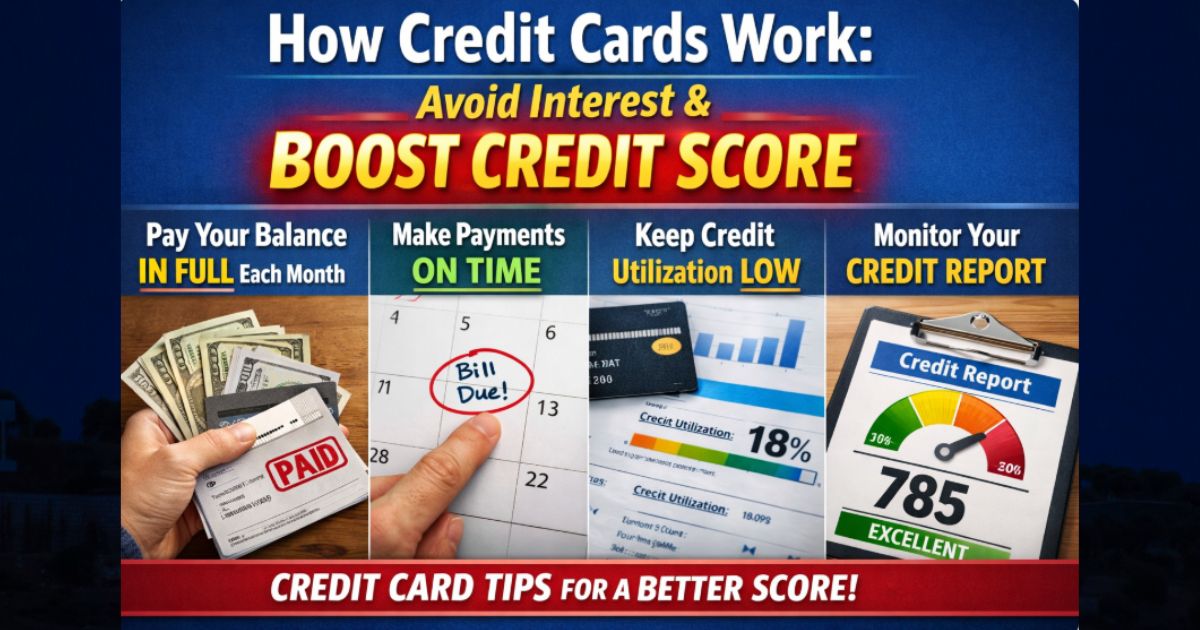
- Always pay the full bill before the due date
- Avoid using credit cards for cash withdrawals
- Keep credit utilization below 30%
- Set payment reminders or auto-debit
- Track expenses regularly
- Avoid unnecessary EMI conversions
Responsible usage = Zero interest + Better credit score.
Frequently Asked Questions (FAQ)
1. How does a credit card actually work?
A credit card allows you to borrow money from the bank up to a certain limit and repay it later during the billing cycle.
2. What happens if I pay only the minimum due?
Interest will be charged on the remaining unpaid amount, and it can accumulate quickly.
3. Is using a credit card good for credit score?
Yes, if you pay your bills on time and maintain low credit utilization.
4. What is a billing cycle?
It is the 30-day period during which your transactions are recorded before generating your monthly statement.
5. How can I avoid paying credit card interest?
Pay the total outstanding amount before the due date every month.
Conclusion
Credit cards are powerful financial tools when used wisely. Understanding how credit cards work, how interest is calculated, and how billing cycles function can protect you from debt.
- Use your card smartly.
- Pay on time.
- Control your spending.
That small plastic card can either build your financial future — or damage it.
The choice is yours.

- LPG Aadhaar eKYC: అక్టోబర్ 1 నుంచి సబ్సిడీకి కొత్త రూల్.. సిలిండర్ బుక్ చేసుకునే ముందు ఇది చేయండి - సెప్టెంబర్ 22, 2026
- Gold Price Hike: బంగారం ధర మళ్లీ షాక్.. హైదరాబాద్లో రేట్లు ఇవే - సెప్టెంబర్ 20, 2026
- NTR Bharosa Pension Application Status: దరఖాస్తు స్టేటస్ ఇలా తెలుసుకోండి - సెప్టెంబర్ 19, 2026


