
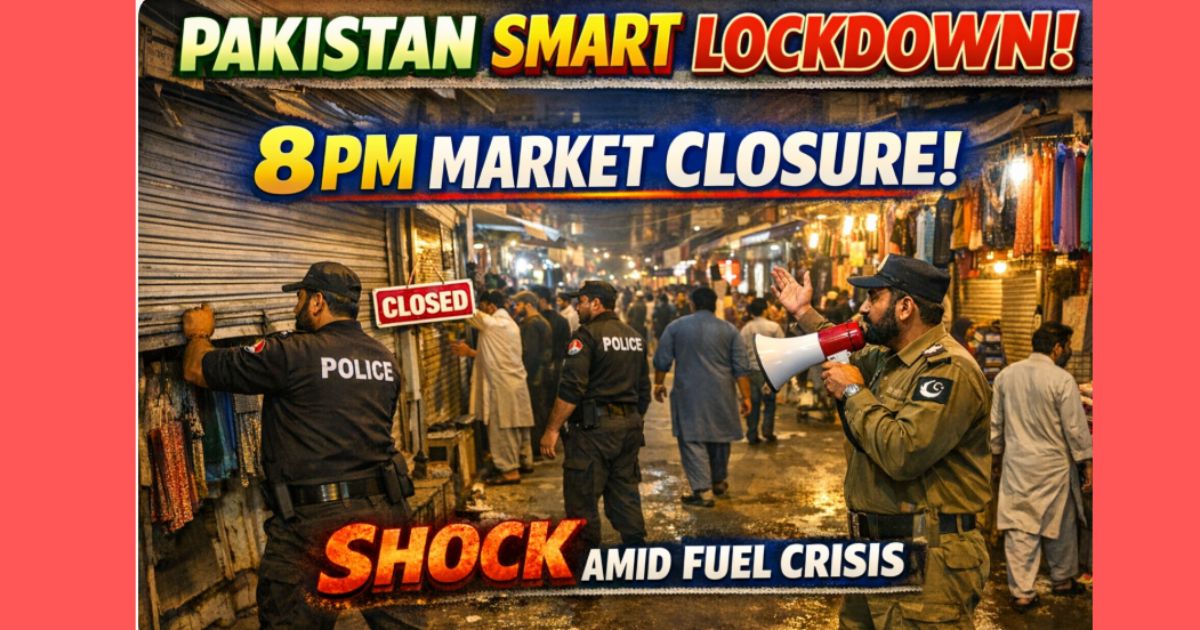
Pakistan Smart Lockdown: 8PM Market Closure Shock Amid Fuel Crisis
The intensifying conflict involving Iran, Israel, and the United States has triggered global economic tremors. One of the worst-hit nations is now Pakistan, which has announced strict energy-saving measures as fuel prices skyrocket.
8 PM Shutdown Order Across Major Regions
Under the leadership of Prime Minister Shehbaz Sharif, the government has ordered:
- Markets
- Shopping malls
- Departmental stores
- Commercial centers
to shut down by 8 PM starting April 7.
The order applies to:
- Punjab
- Khyber Pakhtunkhwa
- Balochistan
- Islamabad
- Gilgit-Baltistan
- Pakistan-occupied Kashmir
However, select divisional headquarters in Khyber Pakhtunkhwa may remain open until 9 PM.
Restaurants & Wedding Halls Face Restrictions
Additional restrictions include:
- Restaurants, bakeries, and tandoors must close by 10 PM
- Marriage halls must shut by 10 PM
- Wedding events at private residences cannot continue beyond the time limit
- Hospitals and pharmacies are exempted
This move is being described as a “Smart Lockdown” focused on energy conservation rather than health concerns.
Why Is Pakistan Facing a Fuel Crisis?
The conflict has severely affected oil transportation routes, especially the crucial Strait of Hormuz — a key global energy corridor.
As tensions escalated:
- Petrol and diesel prices surged dramatically
- On March 6, fuel prices jumped by Rs. 55 per litre
- By April 2, petrol reportedly crossed Rs. 458 per litre
- Diesel touched Rs. 520 per litre
In response, the government later announced a temporary price relief by reducing petroleum levy charges.
Austerity Measures Announced
To manage economic pressure, the government is considering:
- A proposed four-day workweek
- Reduction in fuel allowances
- 20% budget cuts across departments
- Strict monitoring of energy consumption
These measures reflect the mounting pressure on Pakistan’s fragile economy amid global instability.
Global Impact of the Conflict
The confrontation that began on February 28 has escalated regional tensions. Oil supply chains remain uncertain, affecting countries dependent on Gulf energy exports.
For Pakistan, already battling inflation and debt challenges, the fuel crisis has intensified economic stress and public concern.
FAQ
1. Why did Pakistan impose a Smart Lockdown?
To conserve fuel and manage rising energy costs triggered by global oil disruptions.
2. When will markets close in Pakistan?
Markets and malls must close by 8 PM starting April 7.
3. Are hospitals affected by the lockdown?
No. Hospitals and pharmacies are exempted.
4. Why did fuel prices increase in Pakistan?
Global oil supply disruptions and tensions near the Strait of Hormuz led to price hikes.
5. Is this a health-related lockdown?
No. It is strictly an energy conservation measure.
Conclusion
Pakistan’s sudden 8 PM market shutdown signals the seriousness of the ongoing fuel crisis. With global tensions disrupting oil supplies and prices hitting record levels, the government is taking aggressive steps to prevent further economic strain.
Whether these measures stabilize the situation or deepen public frustration remains to be seen. But one thing is clear — the impact of Middle East tensions is now being felt far beyond the battlefield.


