
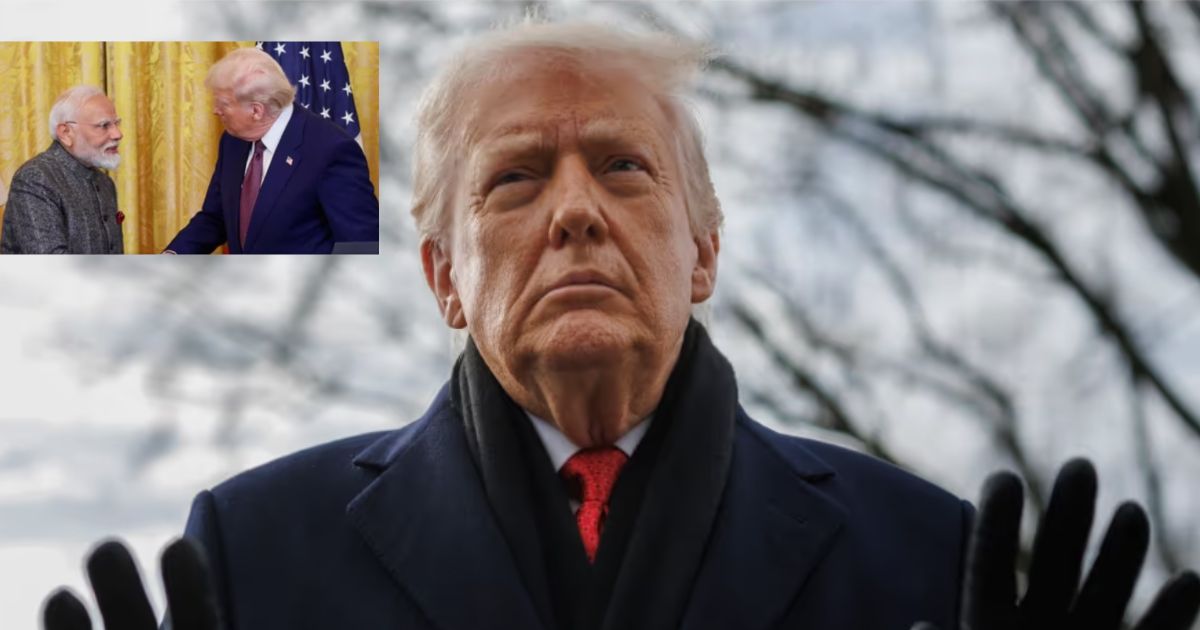
US Supreme Court Strikes Down Trump Tariffs in 6-3 Shock Ruling
US Supreme Court Trump Tariffs Ruling: In a dramatic 6-3 decision, the Supreme Court of the United States has ruled that former President Donald Trump exceeded his authority by imposing sweeping tariffs under emergency powers.
The court clarified that the president cannot use the International Emergency Economic Powers Act (IEEPA) to enforce broad trade tariffs on other nations.
The ruling is being seen as a major restriction on presidential powers in trade matters.
6-3 Verdict: What the Court Said
A nine-judge bench ruled that emergency laws were never intended to serve as general trade tools.
The majority opinion stated that if Congress intended to give such wide tariff authority to the president, it would have clearly written it into law.
However, Justices Clarence Thomas, Samuel Alito, and Brett Kavanaugh dissented from the ruling.
The court upheld lower court decisions declaring Trump’s tariffs illegal.
Why Were the Tariffs Imposed?
During his presidency, Trump imposed tariffs on multiple countries, including:
- China
- Mexico
- Canada
- India
He claimed the tariffs were necessary to:
- Protect American industries
- Counter unfair trade practices
- Address immigration and drug trafficking
- Respond to energy trade concerns
- Special “reciprocal tariffs” were also introduced, affecting global trade flows.
Must Collected Tariff Money Be Returned?
The Supreme Court directed the government to:
- Stop collecting excessive tariffs immediately
- Revise existing tariff structures
- Return unlawfully collected funds
- This order could have significant financial and diplomatic implications.
- Impact on Presidential Emergency Powers
- The ruling sharply limits how future presidents can use emergency economic powers.
- Legal experts say this decision will shape how trade policy is implemented in the United States going forward.
- The judgment draws a clear boundary: emergency powers cannot replace Congress-approved trade laws.
Trump Defends His Decision
Before the ruling, Trump defended his tariff strategy at a public event, stating that the measures were necessary to protect the US economy from collapse.
He maintained that the legal wording supported his actions and criticized the delay in the court’s judgment.
US Stock Markets React Positively
Global markets had faced prolonged uncertainty due to tariff tensions.
Following the verdict:
- US stock markets rallied
- Investor confidence improved
- Global trade outlook stabilized
Market analysts are now closely watching how Indian markets will respond in the coming days.
FAQs
1. What did the US Supreme Court decide on Trump tariffs?
The court ruled 6-3 that Trump’s tariffs imposed under emergency powers were illegal.
2. Which law was questioned in the ruling?
The court examined the International Emergency Economic Powers Act (IEEPA).
3. Will tariff money be refunded?
Yes, the court directed that unlawfully collected tariff funds must be returned.
4. How does this affect US presidential powers?
It limits the president’s ability to use emergency powers for trade policy.
5. How did stock markets react?
US markets gained after the ruling due to reduced trade uncertainty.
Conclusion
The Supreme Court’s ruling marks a historic moment in US trade policy. By striking down Trump’s emergency tariffs, the court has reinforced congressional authority over trade matters.
The decision not only impacts the United States but also sends strong signals to global markets, including India and China. Moving forward, presidential powers in economic emergencies will face stricter legal scrutiny.
This landmark judgment could redefine how future administrations approach international trade and economic policy.

- Iran US Ceasefire Proposal: War Finally Ending? - April 6, 2026
- AC vs Cooler: Which Is Better for Your Health in Summer? - April 4, 2026
- Mohammed Siraj Injury Update: Shocking Moment in IPL 2026 - April 4, 2026


