
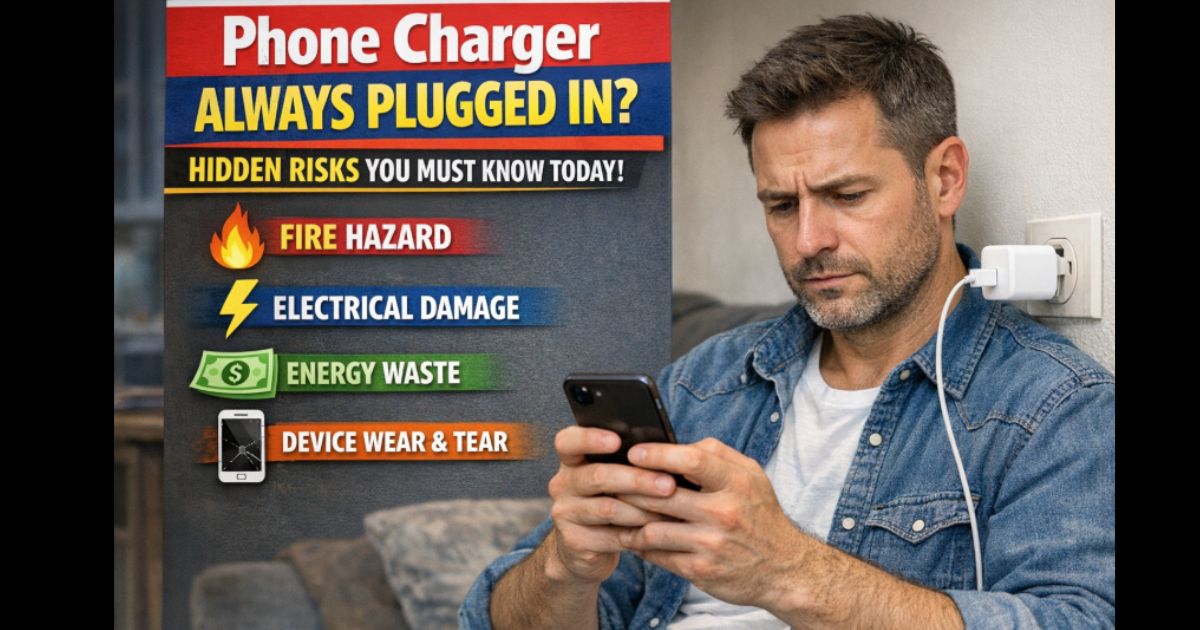
Tech Tips: Do You Always Leave Your Phone Charger Plugged In? Hidden Risks Explained
Many people have a common habit of leaving their phone charger plugged into the power socket, even when the phone is not connected. Most users think it is convenient because the charger is ready whenever they need it.
But is this habit really safe?
Technology experts say that although modern smartphone chargers include safety features, keeping them plugged in constantly may still have some drawbacks.
Let’s understand what actually happens when a charger stays plugged in all the time.
1. Chargers Still Consume Power Even Without a Phone
One surprising fact is that a charger can still consume electricity even when the phone is not connected.
This is known as standby power or phantom energy.
The amount of electricity used by a single charger is very small. However, if multiple chargers and electronic devices remain plugged in throughout the house, the total electricity consumption can increase over time.
In the long run, this may slightly increase your monthly electricity bill.
2. Charger Lifespan May Reduce
When a charger is continuously plugged into a power outlet, the internal electronic components remain connected to electricity.
This constant exposure to electrical current can slowly affect the charger’s components. Over time, this may lead to:
- Reduced charger efficiency
- Slower charging speed
- Shorter charger lifespan
Unplugging the charger when not in use can help extend its lifespan.
3. Risk of Overheating and Fire Hazard
In some situations, chargers may become overheated, especially if they are:
- Old chargers
- Low-quality or duplicate chargers
- Damaged chargers
Although rare, overheating can sometimes lead to serious safety risks such as fire hazards.
Experts recommend unplugging chargers when:
- You leave the house
- During the night
- When the charger is not being used
4. Voltage Fluctuations Can Damage Chargers
Power supply in homes may experience voltage fluctuations due to:
- Rain or storms
- Power outages
- Electrical issues
If a charger remains plugged in during these fluctuations, it may experience additional electrical stress. Over time, this can cause charger malfunction or damage.
Unplugging unused chargers can help reduce this risk.
5. Modern Chargers Are Designed With Safety Features
The good news is that modern smartphone chargers are much safer than older models.
Most chargers automatically switch to low power consumption mode once the phone reaches full charge. This reduces the chances of major accidents.
However, technology experts still recommend unplugging chargers when they are not needed as a simple safety and energy-saving habit.
FAQ
Is it dangerous to leave a phone charger plugged in all the time?
Modern chargers are designed with safety features, so it is generally safe. However, leaving them plugged in constantly can waste small amounts of electricity and may reduce charger lifespan.
Does a charger consume electricity when not connected to a phone?
Yes. Chargers use a tiny amount of electricity called phantom power or standby power, even when no device is connected.
Can leaving a charger plugged in cause overheating?
In rare cases, especially with old or low-quality chargers, overheating may occur if the charger remains plugged in for long periods.
Should I unplug my charger at night?
Experts recommend unplugging chargers at night or when not in use to reduce energy waste and improve safety.
Conclusion
Leaving a phone charger plugged in all the time may not pose an immediate danger, especially with modern chargers that include built-in safety features. However, it can still lead to small electricity waste, reduced charger lifespan, and possible overheating risks in some cases.
Developing a simple habit of unplugging your charger after use can help save electricity, improve safety, and extend the life of your device.


