
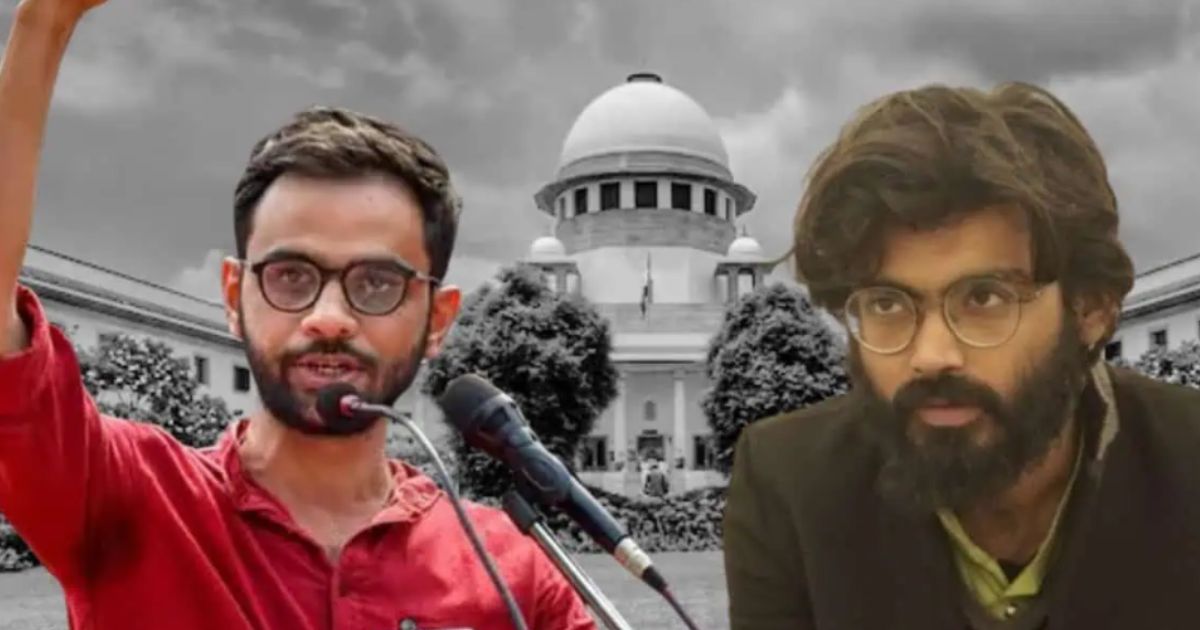
Umar Khalid bail rejected | Delhi Riots Case
The Supreme Court on Monday, January 5, declined to grant bail to activists Umar Khalid and Sharjeel Imam in the alleged conspiracy behind the 2020 Delhi riots, observing that a prima facie case under the Unlawful Activities (Prevention) Act (UAPA) is made out against them.
A bench comprising Justices Aravind Kumar and N V Anjaria ruled that the material presented by the prosecution met the statutory threshold required under UAPA, making the accused ineligible for bail at this stage.
“This court is satisfied that the prosecution material discloses a prima facie allegation against the appellants, Umar Khalid and Sharjeel Imam. The statutory bar under UAPA stands attracted,” the bench stated.
Bail Granted to Five Other Accused
While rejecting bail for Khalid and Imam, the apex court granted bail to five other activists accused in the same case:
- Gulfisha Fatima
- Meeran Haider
- Shifa Ur Rehman
- Mohd. Saleem Khan
- Shadab Ahmad
Background of the Case
The accused were booked under UAPA and provisions of the erstwhile Indian Penal Code for allegedly being the “masterminds” behind the February 2020 northeast Delhi riots, which resulted in:
- 53 deaths
- Over 700 people were injured
The violence occurred amid large-scale protests against the Citizenship (Amendment) Act (CAA) and the proposed National Register of Citizens (NRC).
Legal Proceedings So Far
On September 2, the Delhi High Court denied bail to the accused in the “larger conspiracy” case.
The matter was later challenged before the Supreme Court.
After hearing detailed arguments from Solicitor General Tushar Mehta, Additional Solicitor General S V Raju, and senior advocates including Kapil Sibal, Abhishek Singhvi, Siddhartha Dave, Salman Khurshid, and Sidharth Luthra, the top court reserved its verdict on December 10.
The verdict was pronounced on January 5.
Frequently Asked Questions (FAQ)
Q1. Why did the Supreme Court deny bail to Umar Khalid and Sharjeel Imam?
The court found a prima facie case under UAPA, which imposes strict conditions for granting bail.
Q2. Who were granted bail in the Delhi riots conspiracy case?
Gulfisha Fatima, Meeran Haider, Shifa Ur Rehman, Mohd. Saleem Khan and Shadab Ahmad were granted bail.
Q3. What is UAPA and why is it significant?
UAPA is India’s anti-terror law, making bail difficult if the court finds initial evidence supporting the allegations.
Q4. What triggered the 2020 Delhi riots?
The riots erupted during protests against the CAA and NRC in northeast Delhi.
Conclusion
The Supreme Court’s verdict in the Delhi riots conspiracy case marks a crucial legal development, reinforcing the stringent bail provisions under UAPA. While relief was extended to five accused, the rejection of bail for Umar Khalid and Sharjeel Imam highlights the court’s view that serious charges backed by prima facie evidence warrant continued judicial custody.

- US-Iran Talks Begin as Hormuz Tensions Shake Oil Markets - April 11, 2026
- Iran’s New Supreme Leader Reportedly Recovering from Serious War Injuries - April 11, 2026
- EU Airline Industry Warns of Fuel Shortages if Strait of Hormuz Stays Closed - April 11, 2026


