
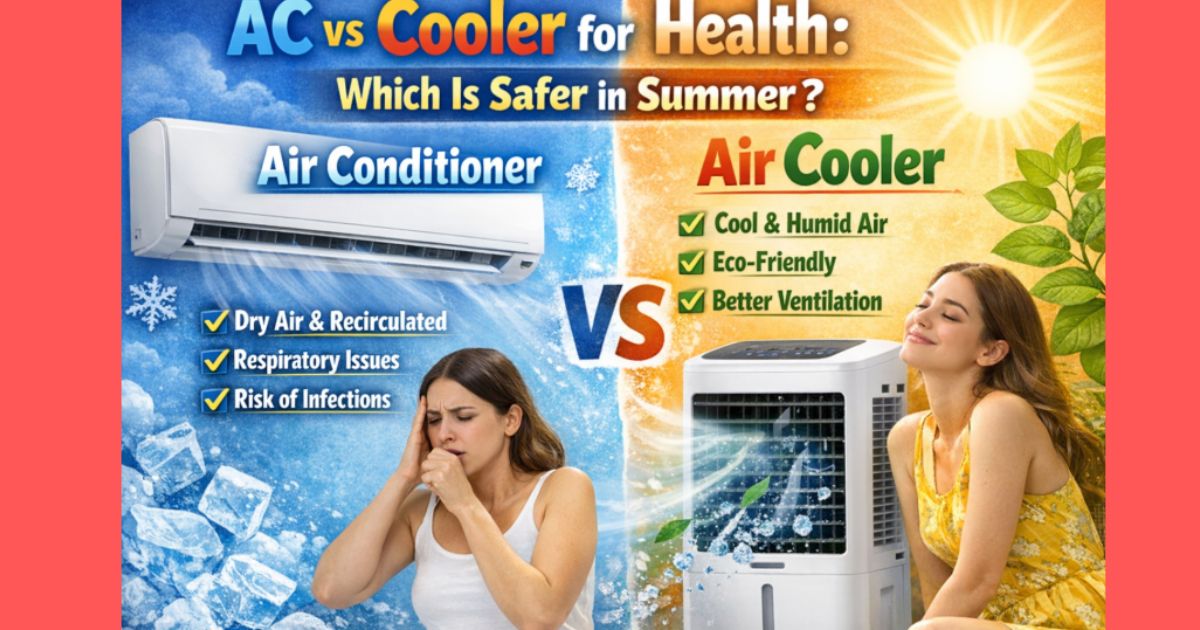
AC vs Cooler: Which Is Better for Your Health in Summer?
As temperatures soar during summer, the first thing most of us do is switch on the AC or cooler. But is cooling alone enough? Have you ever wondered which option is actually safer for your health?
Health experts say the choice between an air conditioner and a cooler should depend not only on comfort, but also on air quality, humidity levels, and your body’s response.
Let’s break down the real differences.
Air Quality & Breathing Comfort
Cooler Air – More Natural Ventilation
Air coolers pull fresh air from outside, pass it through water-soaked pads, and circulate it into the room.
- Maintains oxygen levels
- Adds natural moisture to the air
- Easier on breathing
- Suitable for dry climates
Because coolers allow air circulation, the room does not feel suffocating.
Best Cooler to Buy
Crompton Ozone 75 Litres Desert Air Cooler for home
AC Air – Recirculated Indoor Cooling
Air conditioners cool and recirculate the same indoor air. Rooms are usually closed tightly for better cooling efficiency.
- Reduces humidity
- Can dry out skin and throat
- Limited fresh air flow
Long hours in AC may cause dryness, irritation, or mild respiratory discomfort.
Best AC to Buy
Carrier 1.5 Ton 3 Star, New Star rated, Flexicool Inverter Split AC
Location Matters: Climate-Based Choice
Humid & Coastal Areas: AC performs better because coolers are less effective in high humidity.
Dry & Hot Regions: Coolers provide effective cooling and healthier airflow.
Choosing based on your local weather conditions improves both comfort and health.
Health Problems Linked to AC Overuse
Excessive AC exposure may lead to:
- Dry and itchy skin
- Sore throat
- Headaches
- Fatigue
- Respiratory allergies
- Sudden temperature shock when moving outdoors
Extreme temperature differences can weaken your body’s natural adjustment mechanism.
Health Risks of Poorly Maintained Coolers
Coolers are generally healthier for airflow, but poor maintenance can cause:
- Bacterial growth in stagnant water
- Mosquito breeding
- Unpleasant odor
- Allergies
Regular cleaning and water changes are essential.
How to Use AC or Cooler Safely
If Using AC:
Keep the temperature between 24–26°C
Open windows occasionally for fresh air
Clean filters regularly
Avoid direct airflow on the body
If using a cooler:
- Change water daily
- Clean pads weekly
- Ensure proper ventilation
- Prevent water stagnation
So, AC vs Cooler – Which Is Better for Health?
There is no one-size-fits-all answer.
- If you live in a dry region, → Cooler is generally healthier.
- If you live in a humid coastal area → AC is more effective.
- If you have respiratory sensitivity, → Proper ventilation is crucial, whichever you use.
- The key is moderation and maintenance.
Frequently Asked Questions (FAQ)
1. Is sleeping in an AC harmful?
Not harmful if the temperature is moderate (24–26°C) and the room ventilation is maintained.
2. Is cooler air healthier than AC air?
In dry climates, cooler air is often considered more natural and breathable.
3. Can AC cause colds?
AC itself doesn’t cause colds, but sudden temperature changes can weaken immunity temporarily.
4. Does a cooler increase humidity?
Yes, coolers add moisture to air, which helps in dry weather but may feel uncomfortable in humid areas.
5. Which is cheaper to run – AC or a cooler?
Coolers consume significantly less electricity compared to ACs.
Conclusion
Both AC and coolers provide relief from extreme heat, but their impact on health depends on climate, usage habits, and maintenance.
If used wisely, both can be safe. Maintain proper temperature, ensure ventilation, and clean devices regularly to stay cool without harming your health.
Before switching on your cooling device this summer, make sure you’re choosing what’s best not just for comfort, but for your health too.

- AC vs Cooler: Which Is Better for Your Health in Summer? - April 4, 2026
- Mohammed Siraj Injury Update: Shocking Moment in IPL 2026 - April 4, 2026
- Jagan’s ‘Mavigun’ Plan Creates Political Heat in AP - April 2, 2026


