
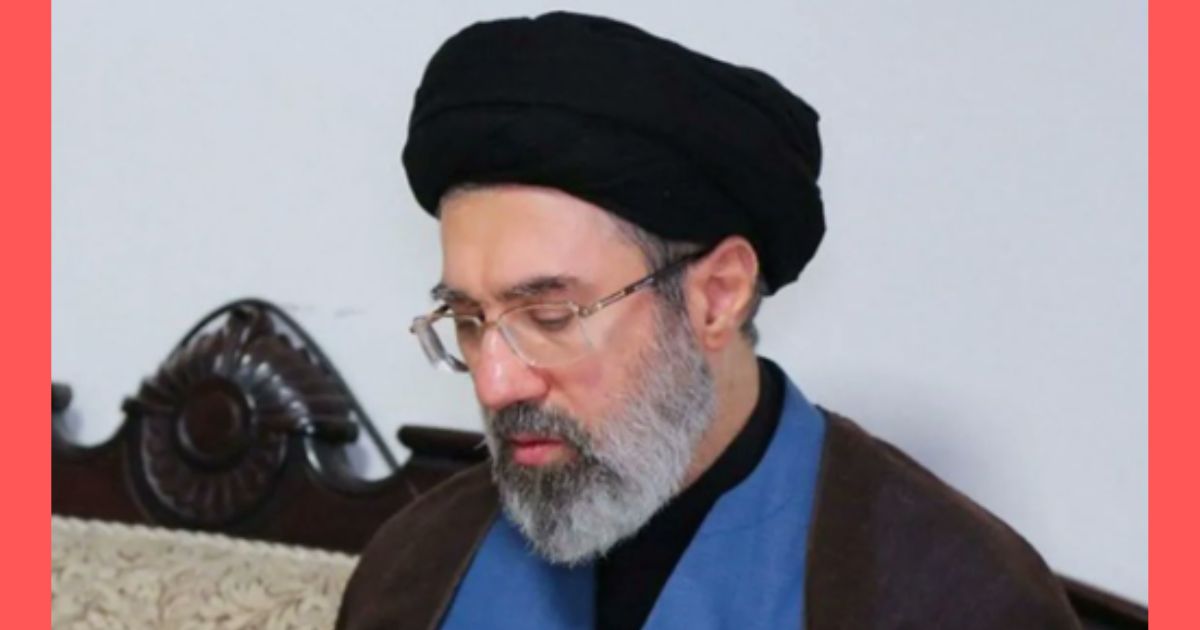
Iran’s New Supreme Leader Reportedly Recovering from Serious War Injuries
Iran’s newly appointed Supreme Leader, Mojtaba Khamenei, is reportedly recovering from severe injuries sustained during an airstrike that killed his father earlier this year. While Iranian officials have released very limited public information, sources close to the country’s leadership say the 56-year-old cleric suffered significant wounds to his face and legs.
His condition comes at a critical moment for Iran, as the country faces escalating regional tensions and prepares for high-stakes diplomatic talks with the United States.
1. What Happened
According to individuals familiar with internal discussions in Tehran, Mojtaba Khamenei was injured in a February 28 airstrike targeting the Supreme Leader’s compound in central Tehran. The strike reportedly killed his father, Ali Khamenei, who had ruled Iran since 1989.
Sources say Mojtaba sustained serious facial injuries and damage to one or both legs. Some assessments suggest he may have lost a leg, though there has been no official confirmation from Iranian authorities. Since the attack, no photographs, video footage, or audio recordings of him have been publicly released.
Despite his injuries, individuals close to the leadership say he remains mentally alert and continues to participate in state affairs. He is reportedly attending high-level meetings via secure audio conferencing and remains involved in key decisions, including war strategy and negotiations with Washington.
Iran’s state media has not provided detailed medical updates. However, shortly after his appointment, a television presenter referred to him as a “janbaz,” a Persian term commonly used to describe individuals who have been seriously wounded in service to the country.
His public absence has fueled speculation both inside Iran and abroad. On Iranian social media platforms, users have circulated memes and conspiracy theories questioning his condition and asking who is truly in charge of the country.
2. Why It Matters
In Iran’s political system, the Supreme Leader holds ultimate authority. The position oversees the president, commands the armed forces, and has final say over national security, foreign policy, and key judicial matters.
The system was shaped by Ruhollah Khomeini, the founder of the Islamic Republic, who established the role as the highest authority above elected institutions.
Any uncertainty surrounding the Supreme Leader’s health raises serious questions about stability—especially during wartime.
Iran is currently navigating one of the most dangerous periods in decades. Regional tensions involving the United States and Israel have escalated dramatically. Control of strategic waterways like the Strait of Hormuz—through which a significant portion of global oil passes—has become a central issue in the conflict.
For Western audiences in the U.S., U.K., and Canada, Iran’s leadership stability matters for several reasons:
Energy markets: Disruption in the Strait of Hormuz can affect global oil prices, impacting fuel costs worldwide.
Security policy: Western governments are closely monitoring Iran’s military posture and diplomatic signals.
Diplomatic negotiations: Talks aimed at reducing tensions depend heavily on who holds real authority in Tehran.
If Mojtaba Khamenei is physically limited or politically constrained, it could shift power dynamics inside Iran’s ruling structure.
3. Who Is Affected
The immediate impact is felt inside Iran’s political establishment. The Islamic Revolutionary Guard Corps (IRGC), commonly known as the Revolutionary Guards, appears to have gained greater influence during the current conflict. Senior Iranian insiders suggest the Guards played a key role in securing Mojtaba’s succession after his father’s death.
If the Supreme Leader is unable to assert strong personal authority, the Revolutionary Guards could emerge as the dominant force guiding military and foreign policy decisions.
Ordinary Iranians are also affected. Economic pressures have intensified due to sanctions, wartime disruptions, and currency instability. Uncertainty about leadership can further shake public confidence and financial markets.
Internationally, governments across Europe and North America are watching closely. Western policymakers are evaluating whether Iran’s decision-making process remains centralized—or if power is shifting toward military leadership.
For neighboring Middle Eastern countries, the question is whether Iran’s stance will soften toward diplomacy or harden under wartime pressure.
4. What Happens Next
Peace talks between Iran and the United States are scheduled to begin in Islamabad, Pakistan. These negotiations are seen as critical to preventing further escalation.
Whether Mojtaba Khamenei will directly influence these discussions remains unclear. Sources indicate he is participating in strategic decisions, but public messaging has largely come from other senior officials.
Observers expect that images or video of the Supreme Leader could be released in the coming weeks if his health stabilizes and security conditions allow. A public appearance would likely be carefully staged to project strength and continuity.
If his injuries are more serious than publicly acknowledged, Iran may rely increasingly on collective decision-making among senior clerics and Revolutionary Guard commanders.
Leadership consolidation could take months—or even years—depending on how authority evolves.
5. Expert Insight
Alex Vatanka, a senior fellow at the Middle East Institute, has suggested that Mojtaba Khamenei may struggle to command the same level of authority his father held.
Ali Khamenei spent decades building relationships across Iran’s clerical and military institutions. Mojtaba, while influential within his father’s office, has not previously held elected office or broad public leadership roles.
Experts note that even if Mojtaba represents policy continuity, he may need time to establish credibility. In the meantime, decision-making may be more collective, particularly in military matters.
Western intelligence assessments have reportedly concluded that the new Supreme Leader was seriously wounded, though official agencies have declined public comment.
The broader question is whether Iran’s political structure remains unified—or whether internal power centers are competing behind the scenes.
FAQ
1. Is Mojtaba Khamenei confirmed to be severely injured?
There has been no official medical statement from Iranian authorities. However, multiple sources close to the leadership indicate he suffered serious injuries in the February airstrike.
2. Has he appeared in public since the attack?
No verified photographs, videos, or audio recordings of him have been released since the airstrike.
3. Who currently holds power in Iran?
Formally, Mojtaba Khamenei is the Supreme Leader. However, analysts believe the Revolutionary Guards and senior clerics may be playing a larger role during his recovery.
4. How does this affect U.S.–Iran relations?
Leadership stability directly impacts negotiations and military decision-making. Any uncertainty can complicate diplomatic efforts.
5. Could there be another leadership change?
At this time, there is no indication of an official leadership transition. However, Iran’s Assembly of Experts has the constitutional authority to appoint a new Supreme Leader if necessary.
Conclusion
Iran stands at a pivotal moment. Mojtaba Khamenei’s reported injuries introduce new uncertainty into an already volatile regional landscape. While sources suggest he remains mentally engaged in state affairs, his physical condition—and ability to project authority—remains unclear.
For global markets, Western policymakers, and Middle Eastern governments alike, the coming weeks will offer important signals about Iran’s leadership stability and its path forward during a critical period of war and diplomacy.

- ఏపీలో స్థానిక ఎన్నికల షెడ్యూల్: మున్సిపల్, ఎంపీటీసీ, పంచాయతీ ఎన్నికలు ఎప్పుడంటే? - అక్టోబర్ 14, 2026
- AP Pension Status by Aadhaar: ఆధార్తో పెన్షన్ స్టేటస్ ఇలా చెక్ చేయండి - అక్టోబర్ 6, 2026
- 5 Lakh Women Entrepreneurs: మహిళలకు సీఎం చంద్రబాబు బంపర్ ప్లాన్.. ‘స్వయం ఏపీ’తో ప్రపంచ మార్కెట్లకు! - అక్టోబర్ 5, 2026


