
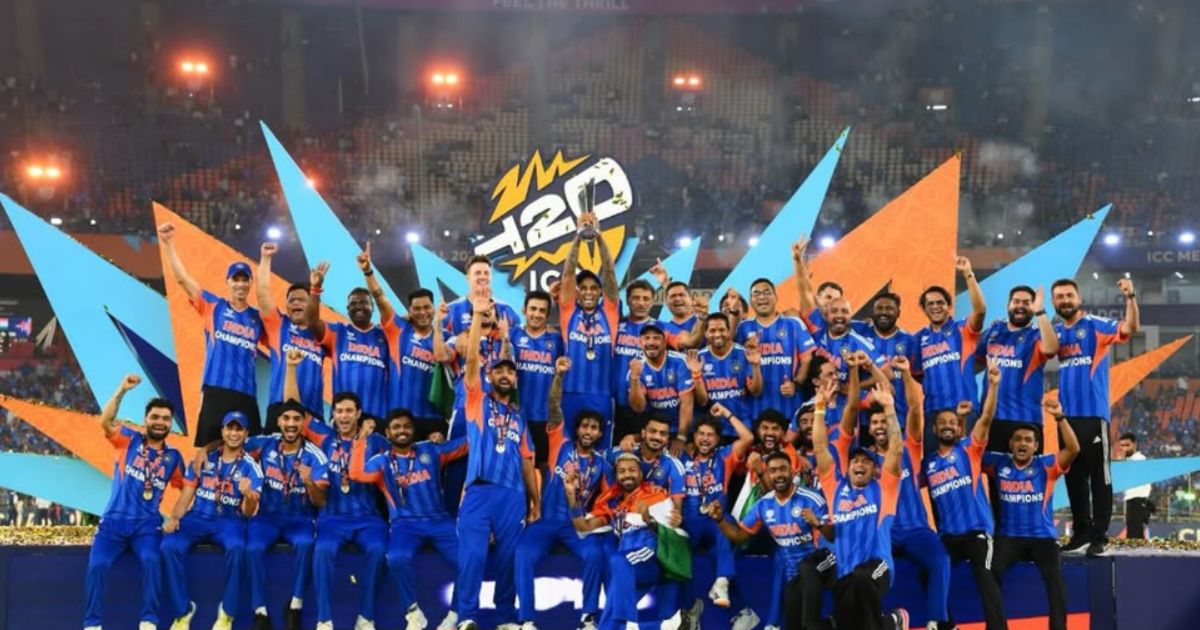
Team India’s T20 World Cup 2026 Victory Is Not Luck — It’s a Process
Team India T20 World Cup 2026: Team India’s victory in the 2026 T20 World Cup was not a sudden miracle or a one-day performance. It is the result of a long-term process built on planning, consistency, and bold thinking.
For nearly three decades, the global cricket landscape has undergone rapid evolution. India’s recent dominance shows how the team has adapted to these changes. The huge 96-run victory over New Zealand in Ahmedabad perfectly demonstrated the new direction Indian cricket has taken under head coach Gautam Gambhir.
Despite facing criticism about team selection, senior players, and his aggressive approach, Gambhir has remained firm in his belief. The World Cup triumph proved that the strategy was working.
Gambhir’s ‘High Risk – High Reward’ Strategy Changing T20 Cricket
One of the biggest changes in India’s T20 approach is the “high risk – high reward” philosophy.
Earlier, teams believed that scoring 150–170 runs in T20 matches was competitive. But Gambhir has introduced a completely different mindset.
The goal is simple — target 250+ runs whenever possible.
This means the team is ready to accept failures. Even if the batting lineup collapses under 100 runs occasionally, the focus remains on maintaining aggressive scoring.
Captain Suryakumar Yadav and the team have fully embraced this fearless mindset. Instead of slowing down after losing wickets, India continues attacking the opposition.
This aggressive philosophy has delivered remarkable results. India has won 30 out of its last 32 international white-ball matches, demonstrating that modern T20 cricket favors boldness over caution.
Team Impact Over Personal Records
Indian cricket is also witnessing a major cultural shift.
Earlier, individual milestones like centuries dominated discussions. Today, team impact matters more than personal achievements.
Sanju Samson’s statement after the World Cup victory captured this new mindset perfectly. He said that competing with teammates for personal records makes no sense when the ultimate goal is team success.
In T20 cricket, even 15 extra runs can change the result of a match. A player slowing down to complete a century could cost the team valuable runs.
That is why the Indian team now values a quick 49 off 18 balls more than a slow century.
Sanju Samson winning the Player of the Tournament award became a strong symbol of this team-first philosophy.
Trust in Young Talent: Abhishek Sharma’s Example
The new Indian management also believes strongly in young talent.
Opener Abhishek Sharma struggled during parts of the World Cup, but the team management continued to back him. They believed that when the opportunity arrived, his aggressive batting could destroy any bowling attack.
That faith paid off in the T20 World Cup final, where Abhishek Sharma dominated the powerplay and almost sealed India’s victory early in the match.
Such trust in young players shows how India is building a fearless and confident squad.
Future Vision: Batting Till Number 10
The future of Indian T20 cricket may look even more aggressive.
With multi-skill players like Nitish Kumar Reddy, Washington Sundar, Shivam Dube, Abhishek Sharma and Tilak Varma, India could soon have a lineup where almost every player can bat.
This means the team could realistically bat until number 10.
If that happens, scoring 250 or even 300 runs in T20 matches may no longer be impossible for India.
Data Analytics Behind India’s Success
Another key reason for India’s dominance is the growing use of data analytics in cricket strategy.
The BCCI has invested heavily in technology to analyse:
- Opponent weaknesses
- Batter vs bowler matchups
- Pitch behaviour in different situations
- Performance patterns under pressure
Gautam Gambhir uses this information to make tactical decisions, including bowling changes and batting order adjustments.
For example, strategies like using spinners during the power play or creating left-right batting combinations are often based on detailed data analysis.
This analytical approach ensures India stays ahead of its competitors.
Strong Bench Strength Built Over Years
India’s success is also built on the foundation created during the previous coaching era.
Under Rahul Dravid, the system focused on strengthening India’s bench strength through the National Cricket Academy (NCA).
Young players are now groomed early for international cricket, ensuring a constant supply of talent.
Additionally, the fitness revolution introduced by Virat Kohli has transformed the team’s physical standards. Fitness is now treated as a lifestyle rather than just preparation for matches.
Jasprit Bumrah: India’s ‘National Treasure’
While India’s batting grabs headlines, Jasprit Bumrah remains the backbone of the bowling attack.
Captain Suryakumar Yadav even called him a “national treasure.”
Even on flat batting tracks, Bumrah can produce incredible spells like 4 wickets for 15 runs, creating pressure that allows other bowlers to strike.
India’s pace attack — featuring Bumrah, Arshdeep Singh, Mohammed Shami and Mohammed Siraj — now regularly bowls above 140 kmph, making it one of the most dangerous fast-bowling units in world cricket.
Fearless Cricket: The Biggest Transformation
Perhaps the biggest transformation in Indian cricket over the last 30 years is the disappearance of fear.
Today’s Indian team is not afraid of defeat.
Instead, they believe that aggressive cricket and constant pressure on opponents will deliver long-term success.
This fearless mindset has turned India into one of the most dominant forces in modern T20 cricket.
Olympics 2028: India’s Next Big Goal
Captain Suryakumar Yadav has already made it clear that the 2026 T20 World Cup victory is only the beginning.
India’s next big target is winning the cricket gold medal at the 2028 Los Angeles Olympics, where T20 cricket will feature as an official event.
With its current momentum and strategic vision, India appears well prepared for this new challenge.
FAQ
1. Why is Team India’s 2026 T20 World Cup win considered special?
The victory represents a strategic transformation in Indian cricket, focusing on aggressive batting, data analytics, and strong bench strength.
2. What is Gautam Gambhir’s “High Risk – High Reward” strategy?
It focuses on aggressive scoring and targeting 250+ runs rather than playing it safe for 150-170 runs in T20 matches.
3. Why is Sanju Samson’s performance important?
Sanju Samson’s Player of the Tournament award highlights the team’s shift from individual milestones to overall team impact.
4. How does data analytics help Team India?
Data analysis helps identify opponent weaknesses, plan matchups and make tactical decisions during matches.
5. What is India’s next major cricket goal?
India aims to win the cricket gold medal at the 2028 Los Angeles Olympics after their T20 World Cup success.
Conclusion
Team India’s 2026 T20 World Cup triumph is proof that success in modern cricket is not accidental. It is the result of a clear strategy, fearless mindset, strong bench strength, advanced data analytics, and exceptional leadership.
Under Gautam Gambhir and Suryakumar Yadav, India has embraced an aggressive and modern approach to T20 cricket. By prioritizing team impact over individual records and constantly pushing boundaries, this Indian team is setting new global standards.
If this process continues, the future could bring even greater achievements for Indian cricket — including Olympic glory.

- Bigg Boss Telugu 10 Episode 7: త్రిగుణ్కు నాగార్జున క్లాస్.. వీకెండ్లో అసలు ట్విస్ట్ ఇదే! - సెప్టెంబర్ 12, 2026
- Bigg Boss Telugu 10 Voting: ఓటింగ్లో కామనర్ రోహిత్ దూకుడు.. ఆ ఇద్దరికీ ఎలిమినేషన్ టెన్షన్ - సెప్టెంబర్ 10, 2026
- Bigg Boss Telugu 10: 8 ఏళ్లకే తల్లిని కోల్పోయిన షాలినీ.. కన్నీళ్ల వెనుక ఇంత విషాదమా? - సెప్టెంబర్ 10, 2026


